Pakwash
Ontario Parks limited
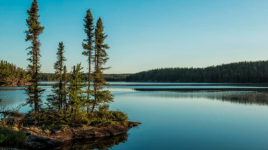
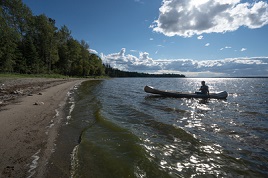
This wilderness park covers 486,258 hectares of northwestern Ontario next to the provincial border of Manitoba and lies about 30 kilometres from Red Lake. It is a paddler’s paradise with 5,190 lakes and 7,840 islands. Unlike most other Ontario Parks, there are no roads in the park. Flying or paddling are the only means of access providing great seclusion and has very little human interference. The park is made up of rocky-shored lakes, rushing and winding streams, roaring rapids and waterfalls, surrounded by a carpet of forest punctuated by open wetlands and rocky outcrops. The Park is included in Canada’s first mixed cultural and natural UNESCO World Heritage Site, Pimachiowin Aki. The heritage site blends both natural and cultural heritage value in addition to being an example of the i…
updated each morning from provincial parks and Environment Canada.
this list adapts to woodland caribou. no showers means a travel towel; the lake means a swimsuit;
commission links. we get a small cut; you pay the same price. how this works.
within ~100 km of woodland caribou.
Cancellation alerts are coming. We’ll email when sites open up at this park.
One email. Unsubscribe anytime. We don’t share addresses. — chris@calgaryanalytica.ca
Provincial parks rely on volunteer stewards for trail maintenance, beach clean-ups, and shoulder-season hosting. Most parks run programs through their park association.
see how to help →